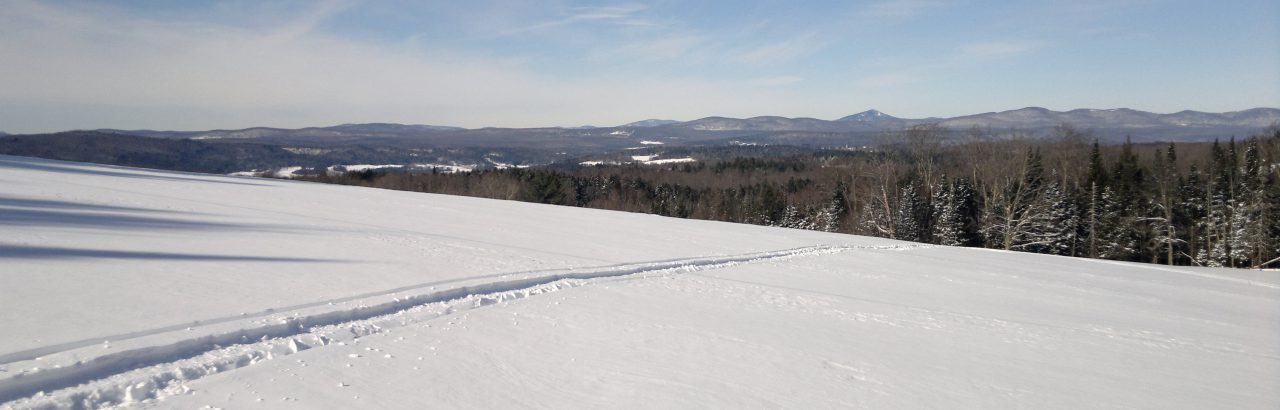
Before closing out the season, a post that’s not about ski conditions and meteorology. The topic for this is nominally about how drone photography has changed the way the outdoors is represented, using a Hollywood tool to express niche or quirky viewpoints related to the outdoors and, of course, cross-country skiing.
Recently this blog picked up a subscriber who is a photographer. In addition to food and other still-lifes, the photographer has a set of nice aerial photos from the Southwest:
Some time before that, I came across another photographer who tends to do lots of drone photos of Vermont and post them on his Instagram;
I recall fondly some beautiful aerial photos in the pages of National Geographic, back when a photographer needed a real expense budget to get such shots (on film for the printed magazine). Today, affordable drones have given still photogrphers a tall perch for the camera without personal risk; better still the perch moves and the camera can point in any direction, including straight down.
The overhead, or ‘10,000 foot view’ sets a thing in its context. For instance, there’s the opening scene from ‘The Sound of Music’, which strings together multiple aerial shots of gorgeous Austrian mountains, delivering the audience by airnail into a fairy-tale story. The montage concludes with that famous helicopter shot closing in on Julie Andrews on. a mountain pasture:
What once required a Hollywood budget has become commonplace. Thanks to the miniaturization possible with tech, and lightweight high-capacity batteries that allow drones able to fly for a long time with a camera payload, cost is now almost negligible – a good thing for activities where funding is scant or the market is small.
When your favorite activity takes place outdoors it adds the challenge of portraying the quality of everyday grandeur. People who don’t know the place or terrain don’t have a visceral map of how it feels, so vistas and views are needed as an introduction. Cross-country skiing also happens to take place mostly in woodlands and gentle hills, so the background lacks the drama of the Austrian Alps. Adding motion worked to dramatize the entrance of Julie Andrews’ character in The Sound of Music, so cue drone video.
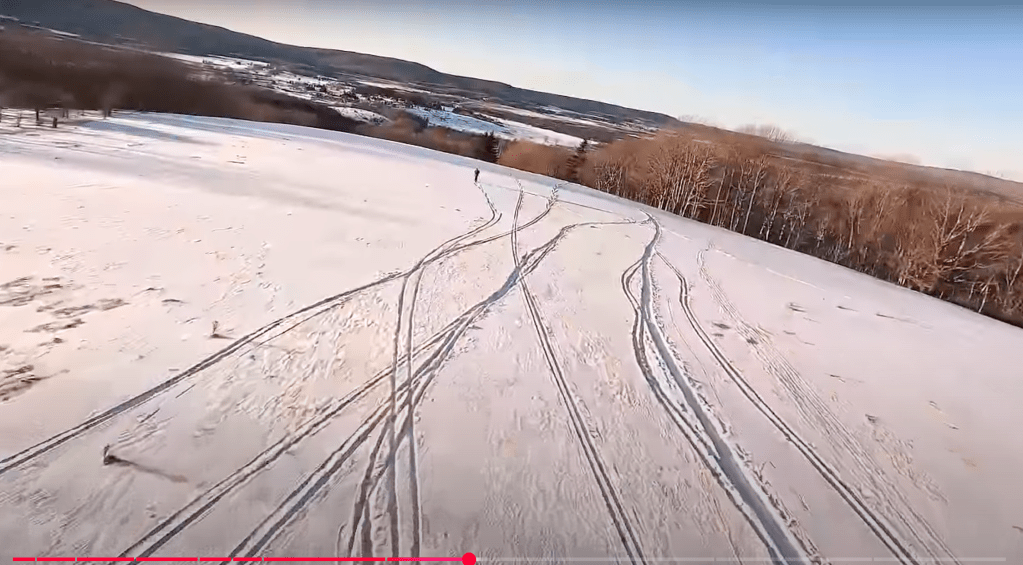
Below are a few videos about cross-country skiing that use drone shots to set context and create visuals that help to cue a visceral sense of place. I’m using screenshots to call out a specific drone shot (most of the Youtub videos can’t be embedded anyway). First up – an interesting local documentary about XC skiing in West Virginia:
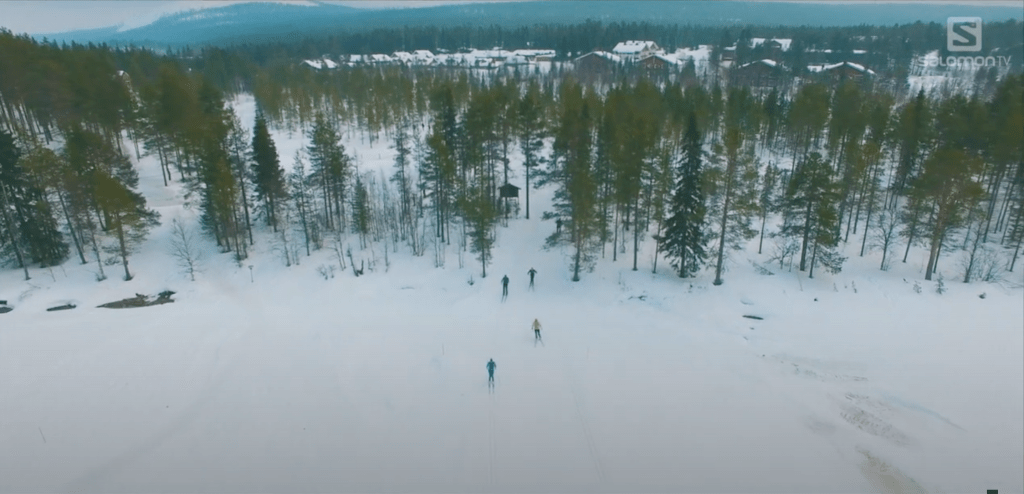
Next, a promo video by Salomon of some couples on a ski trip in Lapland:
University of New Hampshire Ski team gets in on the act with a film about their history and featuring a lot of footage of dryland training. Loved the enthusiasm and the recognizable locations and landscape:
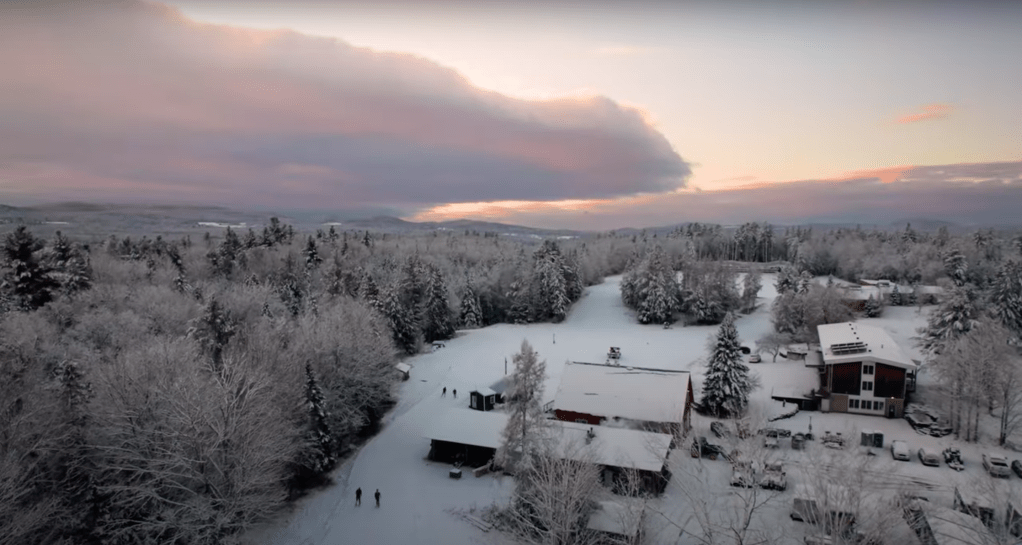
The screenshot above shows Craftsbury Outdoor Center. Tamarack Lodge is on the right, with the Activity Center in the background behind; the skiers are shown entering the stadium area. I knew where they were when watching because I recognized buildings in views from the ground, but I’ve never seen an aerial shot of the COC campus before.
And then there’s this, a drone video recap that shows the manmade snow of the 2024 Birkie trail looping around on bare ground:
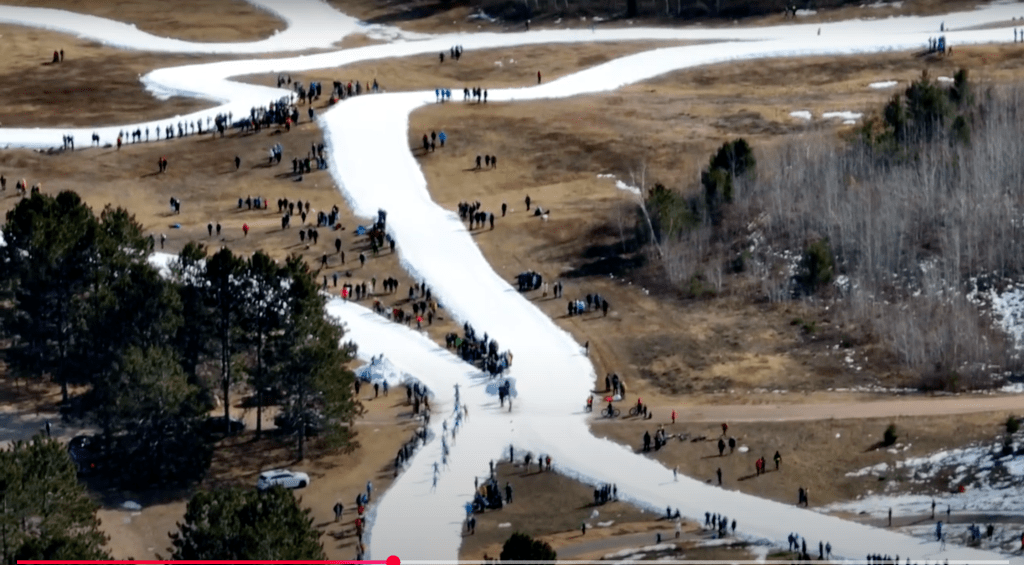
Video also delivers better than still to convey the feel for an activity of motion and movement. I’d love to see more of this kind of thing. It’s an effective way to show the grace and purposeful movement in cross-country skiing, as well as depicting the wonder of the winter woodlands, or wherever.
 Across the Snow Line